The Other Half of the Equation
Physical training is solely the stimulus for adaptation; the actual biological improvements—hypertrophy, neurological efficiency, structural fortification—occur during recovery. A rigorous home fitness routine that neglects restoration will eventually lead to systemic fatigue, mobility restrictions, and a high probability of overuse injuries.
Active vs. Passive Recovery
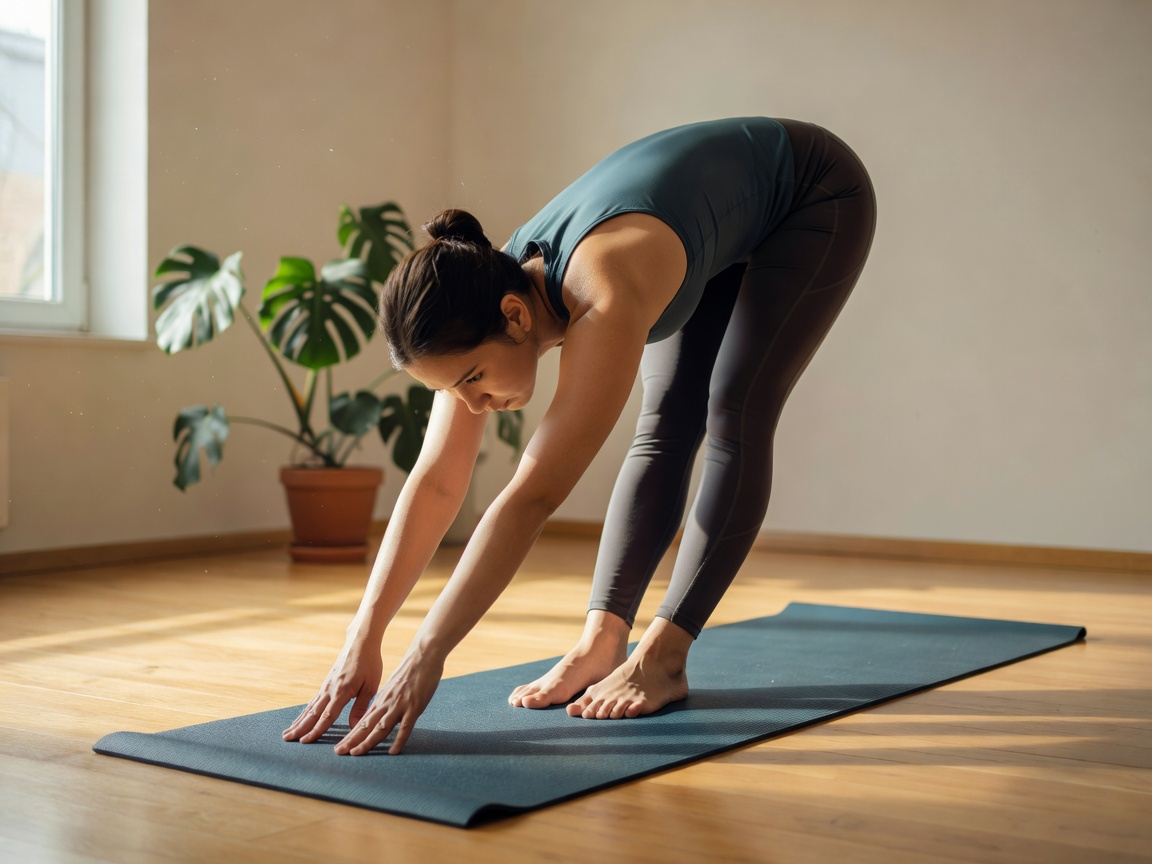
Passive recovery involves complete cessation of physical activity. While sleep is the ultimate form of passive recovery, active recovery plays a crucial role in mitigating delayed onset muscle soreness (DOMS) and maintaining joint health. Active recovery routines elevate the heart rate slightly to promote blood flow, clearing metabolic byproducts without inducing additional muscular damage.
In a small living space, active recovery routines must rely heavily on floor-based mobility flows and focused soft-tissue work.
Soft Tissue Management: Foam Rolling
Myofascial release via a foam roller or massage ball is an essential component of a minimalist recovery routine. The goal is not to aggressively bruise the tissue, but to signal the nervous system to decrease local muscle tension.
- Thoracic Spine: Extending over a foam roller can help counteract the forward-flexed posture endemic to modern computer work, restoring mobility necessary for overhead pressing.
- Glutes and Piriformis: Utilizing a denser tool, like a lacrosse ball, against the floor or wall targets deep external rotators that often become tight from prolonged sitting and heavy squatting patterns.
- Quadriceps: Slow, sweeping rolls along the anterior thigh can reduce tension around the patellar tendon.
Mobility Flows
Rather than holding static stretches for long durations (which can temporarily reduce power output if done prior to lifting), dynamic mobility flows link movements together. A common sequence is the "World's Greatest Stretch" flow, which transitions smoothly from a deep lunge, to a thoracic rotation, into a hamstring extension. These sequences require an area no larger than a standard yoga mat, making them perfect for bedroom or living room routines.
Integrating 10 to 15 minutes of dedicated mobility work on rest days ensures that joint ranges of motion are preserved, movement patterns remain fluid, and the body is primed for the next period of high mechanical tension.