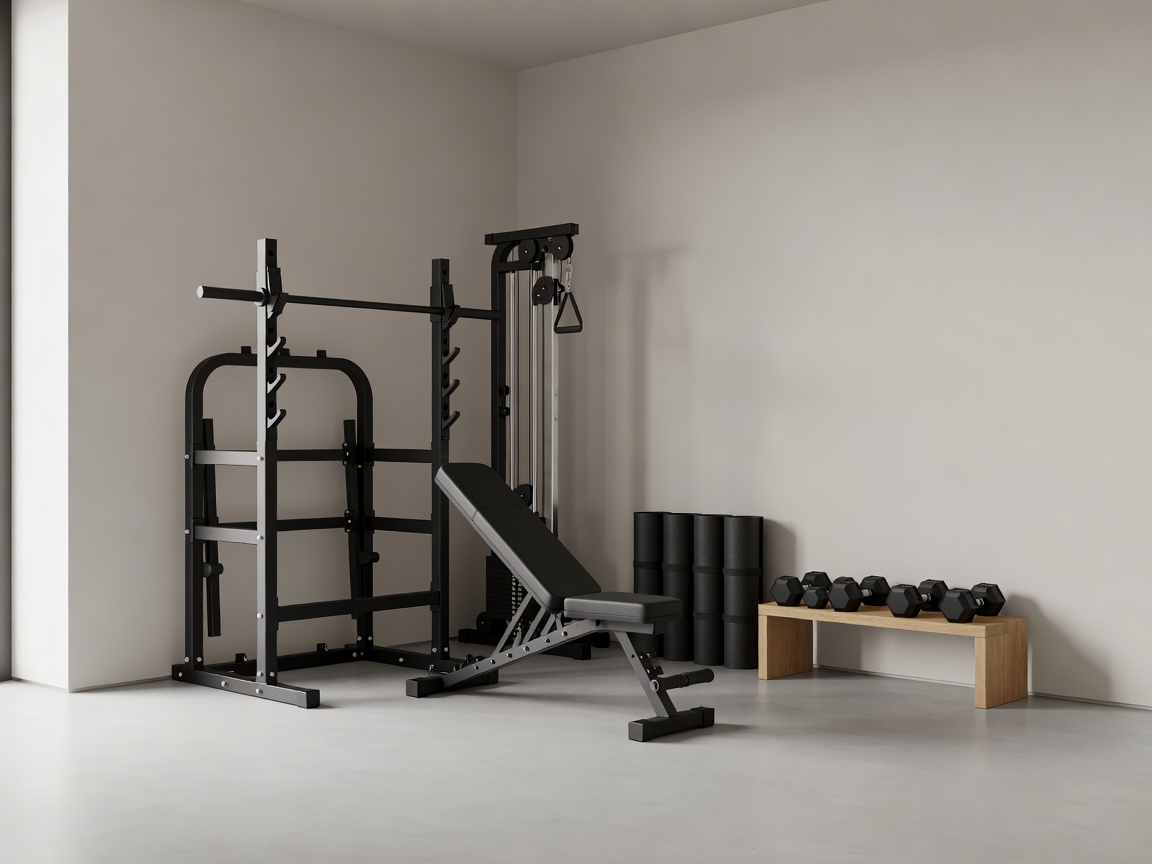
The Spatial Economics of Training
Creating a functional training environment in a small apartment or dedicated spare room requires treating floor space as a premium currency. Every square inch must serve a purpose, and ideally, multiple purposes. The friction of having to move furniture before a workout can derail consistency, meaning the design of a small-space gym must prioritize rapid deployment and seamless storage.
Flooring: The Foundation of Home Training
Before any equipment is purchased, the foundational layer must be addressed. High-density interlocking EVA foam or vulcanized rubber mats are non-negotiable for an indoor gym. Flooring serves three critical functions:
- Impact Absorption: Protecting the structural subfloor from dropped weights.
- Acoustic Dampening: Mitigating noise transmission to neighboring units or lower floors.
- Traction: Providing a non-slip surface essential for explosive movements and heavy lifts.
Verticality in Storage
A common mistake in small gym setups is allowing equipment to sprawl horizontally across the floor space. Dumbbells, foam rollers, and mats left on the floor rapidly consume the very area needed for training. Utilizing vertical storage systems is paramount.
Wall-mounted pegboards or vertically aligned shelving units allow equipment to be stowed vertically. Not only does this clear the floor area, but it also transforms fitness equipment into an organized, visual display, categorizing gear by weight or function.
Zoning the Micro-Gym
Even within a 2x2 meter space, zoning helps dictate the flow of the workout. Consider the area in three distinct planes:
| Zone | Primary Use Case | Required Gear Position |
|---|---|---|
| The Ground Layer | Core work, stretching, push-ups. | Mats centered, weights pushed to edges. |
| The Standing Layer | Squats, presses, swings. | Central floor clear; vertical clearance verified. |
| The Overhead Layer | Pull-ups, suspension trainers. | Doorway frame or secure ceiling mount. |
Environmental Psychology
Finally, a small space must visually signal the transition from domestic rest to physical exertion. If your gym is in the corner of your bedroom or office, psychological separation is critical. Lighting changes (such as a cooler, brighter task light), specific airflow (a dedicated fan), and auditory cues (headphones or a focused speaker) can completely shift the perception of a small footprint, signaling to the brain that it is time to train.